Climate change and biodiversity loss demand urgent, collective action.
ALG is committed to playing our part.
2025 highlights

In numbers
54.7% reduction
in total emissions (scope 1, 2 and all scope 3 emissions) since 2019
67.8% reduction
in scope 1 and 2 emissions since 2019
Working more sustainably
100% renewable energy
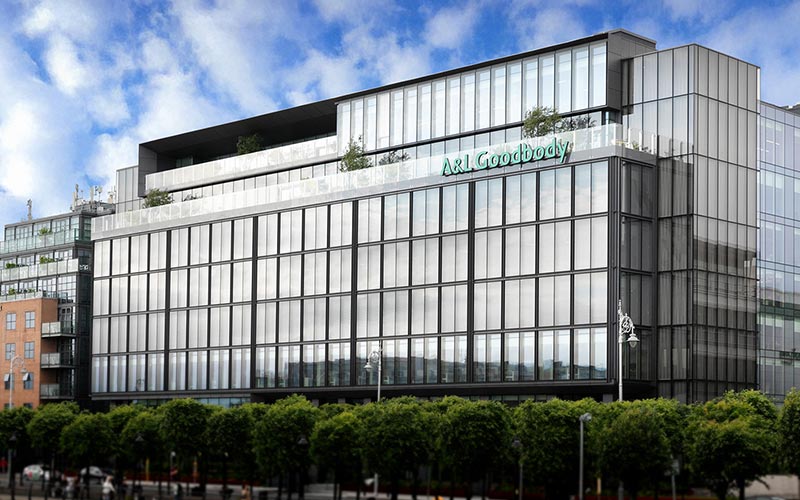
used across Dublin, Belfast and London offices
37,000 kWh less energy
used each month since relocating to our redeveloped headquarters, compared with 2022
Driving progress
All-Ireland Pollinator Plan
became a business supporter
Joined
the Legal Sustainability Alliance (LSA)
Achieved
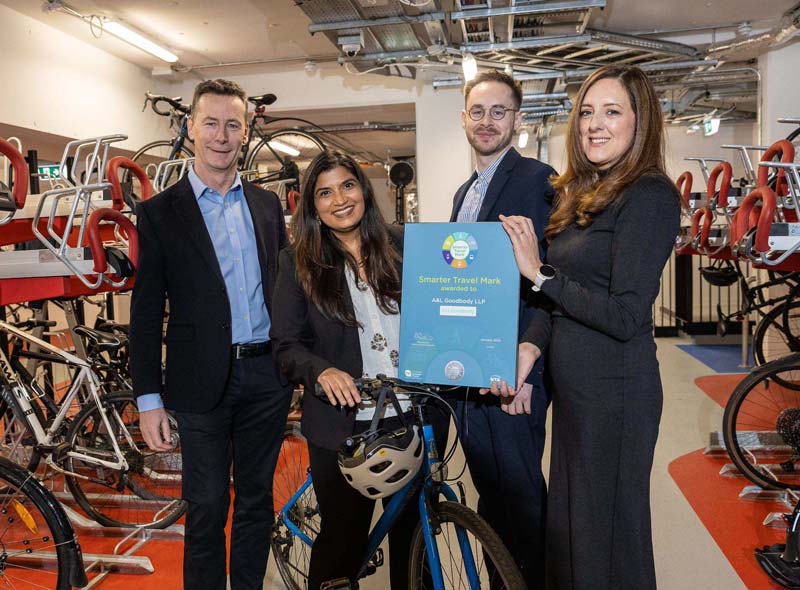
Smarter Travel Mark Silver
Our environment strategy 2025–2027
We are committed to reducing our environmental impact through practical, measurable action.
Our 2025-2027 Environment strategy builds on our progress to date, with a continued focus on reducing carbon emissions while also addressing nature and biodiversity loss.
Over the coming years, we are strengthening our focus on three key priorities.

Data and reporting
Strengthening data quality and streamlining our reporting.

Supply chain engagement
Improving ESG visibility and standards across our supply chain.

Biodiversity
Working with partners to protect and restore nature.

Reducing our environmental impact starts with understanding it. By strengthening our data, tracking progress against our science-based targets and broadening our focus to biodiversity and supply chain engagement, we're building a stronger foundation for long-term action."

Lorraine Fahy
Senior Responsible Business Executive
Measuring progress
Our approved emissions targets
Our Science Based Targets (SBTs) continue to provide a clear pathway to reducing our greenhouse gas emissions. In 2025, we remained focused on embedding these targets into practical decision‑making, and supporting their delivery through improved data, governance and colleague engagement.

01
Reduce absolute scope 1 and 2 GHG emissions 66.2% by 2030.
Emissions associated with gas and electricity use in our offices (base year 2019).
02
Increase sourcing of renewable electricity from 79% to 100% by 2030.
In our Dublin, Belfast and London offices.
03
Reduce absolute scope 3 GHG emissions 46.2% by 2030.
Across fuel and energy-related emissions, waste, business travel and employee commuting (base year 2019).
04
83% of our suppliers by emissions to have set science-based targets by 2028.
Decarbonising our supply chain by helping our suppliers establish systems to measure and reduce their emissions.
Data and our journey to decarbonisation
Data was a key focus of our decarbonisation journey during 2025. We worked to improve the quality and completeness of our emissions data, supporting more informed decision-making as we continue working towards meeting our science‑based targets.
Our carbon footprint 2025
We continue to measure and publish our annual carbon footprint as part of our commitment to transparency and accountability, and to support delivery of our science-based targets in line with best practice.
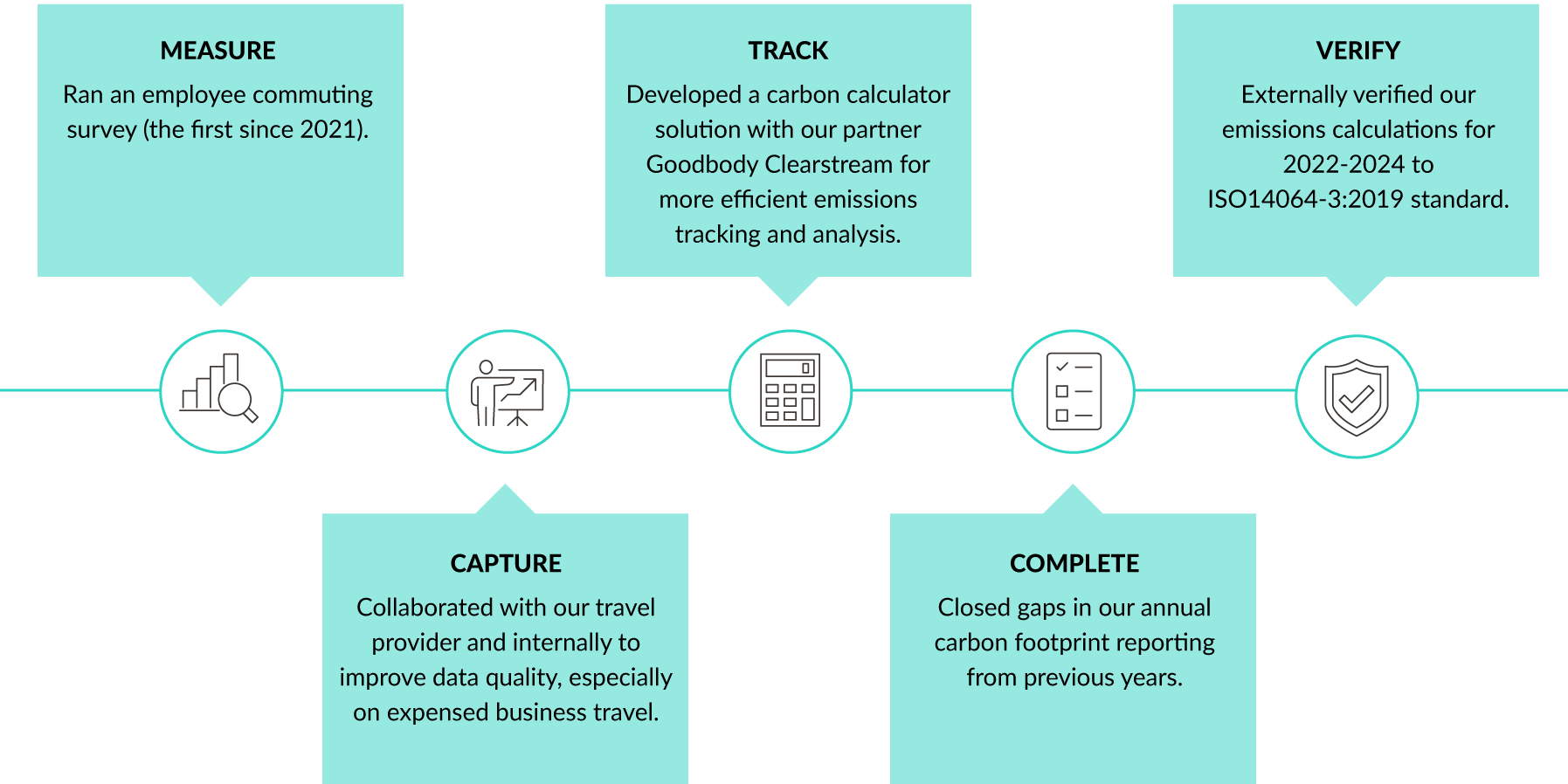
Our greenhouse gas (GHG) emissions have been calculated in line with and independently verified to GHG Verification Standard: ISO – 14064-3:2019 Specifications with Guidance for the Validation and Verification of Greenhouse Gas Statements.
*Purchased Goods & Services Emissions have been revised for 2022, 2023 and 2024. These revisions have been independently verified to ISO-14064-3.
Progress in meeting our absolute emissions reduction targets
In 2025 our total reported emissions decreased by 3.87% compared to 2024 and by approximately 56% compared to our 2019 baseline.
Scope 1 and 2 emissions
Reductions were driven by a decrease in emissions from stationary combustion (–30%) and electricity consumption, with market-based electricity emissions reducing to near zero following our transition to renewable electricity and our move to our new headquarters building where heating is fully electrified and no longer reliant on gas or oil.
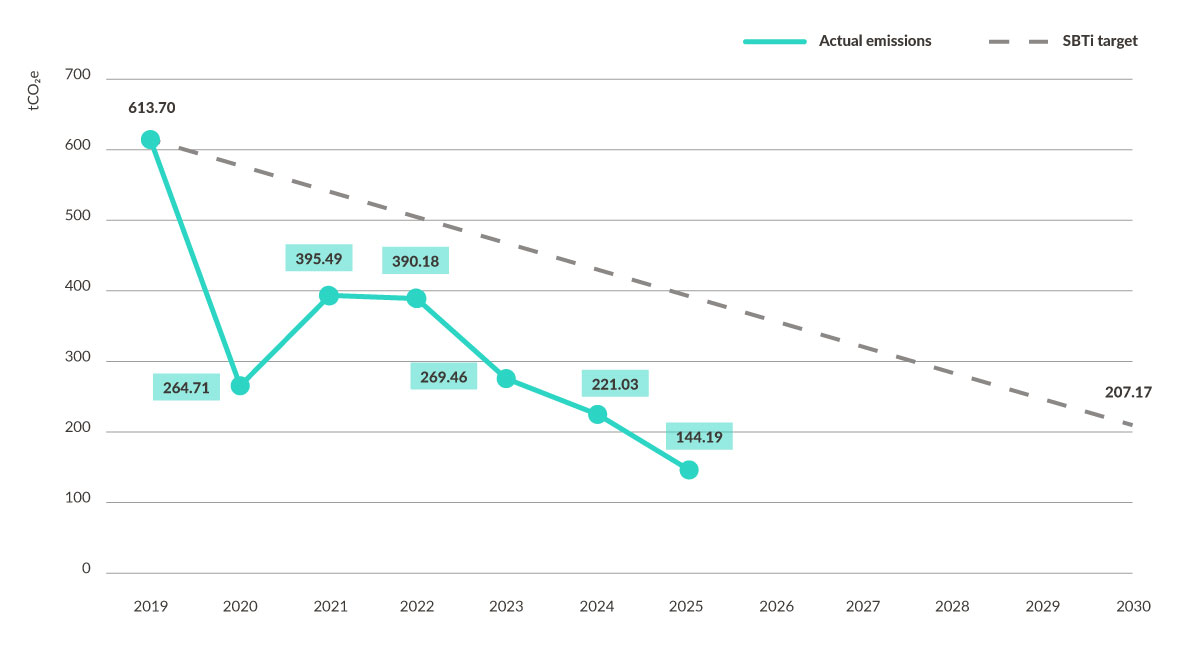
A&L Goodbody committed to reduce absolute scope 1 and 2 GHG emissions 66.2% by 2030 from a 2019 base year.
Scope 3 emissions
Scope 3 emissions remain the largest component of our footprint. Within our targeted Scope 3 categories:
- Business travel emissions decreased by approximately 8% compared with 2024. This reduction was influenced by a downward revision of DEFRA (UK Department of Environment, Food and Rural Affairs) emissions conversion factors, while overall air travel activity increased year-on-year. We therefore continue to focus on absolute emissions outcomes and on managing demand for air travel in line with our Sustainable Travel policy.
- Emissions from fuel- and energy-related activities decreased by approximately 11% owing to increased efficiencies and reduced energy consumption.
- While smaller in absolute terms, emissions from waste increased by approximately 14% in 2025, highlighting an area of focus for improved waste management practices in the coming year.
- Emissions from purchased goods and services increased by approximately 19% in 2025, primarily reflecting additional procurement associated with our move to our new building at NWQ, including IT equipment. Emissions in upstream transportation and distribution increased by approximately 8.8%, highlighting an area requiring closer attention in 2026. While both of these categories of emissions do not form part of our absolute emissions reduction target we recognise their overall contribution to our carbon footprint and will continue to strengthen our approach to supplier engagement, procurement practices and data quality in these areas.
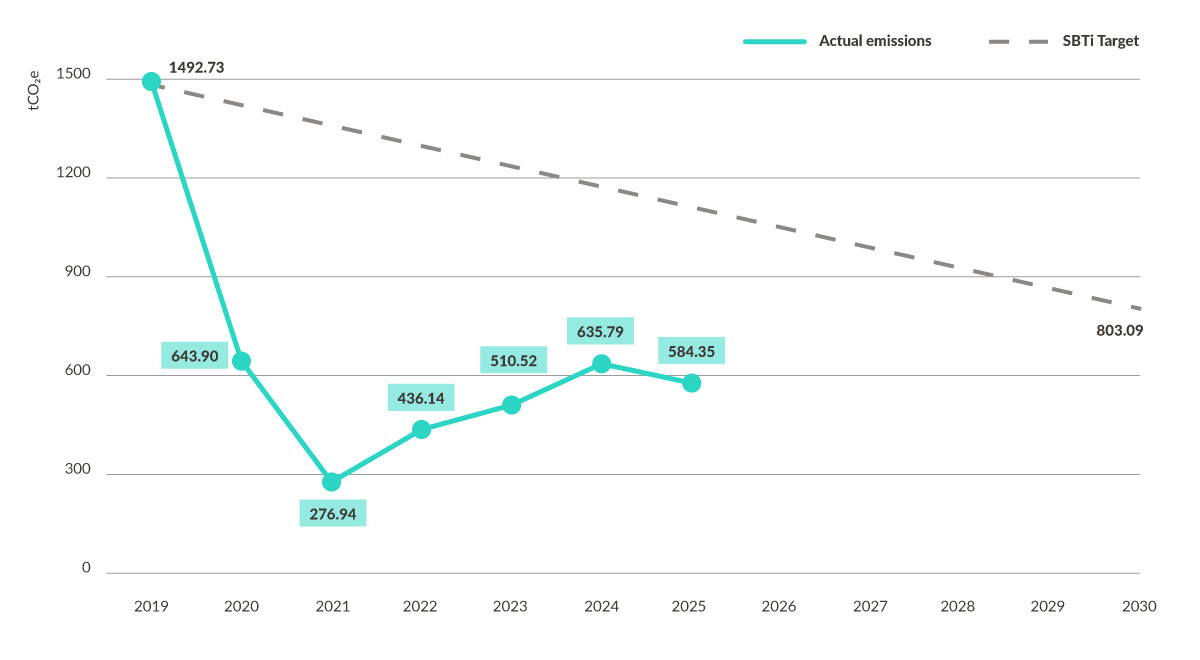
A&L Goodbody commited to reduce absolute scope 3 GHG emissions covering fuel and energy related activities, waste generated in operations, business travel and employee commuting 46.2% by 2030 from a 2019 base year. Chart above shows Scope 3 emissions from categories (3.3; 3.5; 3.6; 3.7).
Supplier engagement target
Progress on our supplier engagement target, covering purchased goods and services and upstream emissions, was limited in 2025. This remains a priority area, and we will strengthen our focus in the coming year to accelerate engagement and drive meaningful progress.
How we’re reducing our environmental impact
Reducing operational energy use at 25 NWQ
The design and operation of 25 NWQ support energy efficiency across the building. We have targeted measures in place to optimise performance across each key energy user:
- HVAC – demand-based ventilation ensures systems operate only as needed. The building uses heat pump technology in place of traditional boilers and chillers.
- Lighting – all light fittings are LED, run with sensors and a DALI control system, reducing energy use in unoccupied areas while maintaining appropriate lighting levels.
- Desktop technology – screens switch off when not in use. Desk-based camera technology detects when a user leaves their workstation, locking the device and placing screens into standby.
The design and operation of 25 NWQ form part of our broader environmental and energy management approach, which is aligned with ISO 14001 and ISO 50001.
“25 NWQ has been designed to optimise energy use in practice—through demand-based systems and smart technology that respond to how the building is actually used”
Business air travel
While essential to supporting our clients, air travel represents the largest share of our business travel emissions.
In 2025 we introduced a Sustainable Travel policy, supported by a dedicated guidance note on air travel, to support our science‑based target to reduce emissions from business travel by 46.2% by 2030. The policy encourages:
- early and purposeful planning
- maximising meetings per trip
- avoiding unnecessary or ad hoc travel
- making informed travel choices, including cabin class selection
We report internally on air travel-related emissions twice a year to keep teams focused on achieving our targets. This includes:
- emissions calculations broken out by department and practice group
- advised maximum number of flights per practice group for the year
- calibrations to allow for business need to travel
ALG Green Committee: turning strategy into everyday choices
Bringing together colleagues from across functions and offices, the Green Committee helps translate our environmental commitments into practical actions and everyday behaviours. In 2025 we strengthened our approach by setting up three dedicated subcommittees focussing on sustainable travel, circular economy and biodiversity.

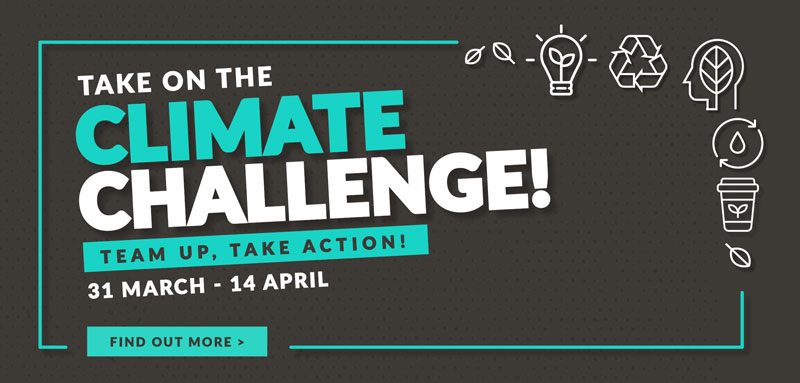
2025 Funds Industry Climate Challenge
Climate change requires collective action. Through the Funds Industry Climate Challenge our people joined others across the sector to turn small everyday actions into measurable impact.
- one of 22 companies taking part in this two-week challenge
- 3,073 participants saved over 322 tonnes of CO2e
- our team logged 11,934 climate-smart actions saving 11,000kgs of carbon – like flying 1.15 times around the globe!
Sustainable travel
Our Sustainable Travel subcommittee works to encourage practical, people‑centred changes in how we travel for work and commute. In 2025 the subcommittee primarily focused on commuting behaviours, using insight-led initiatives to support lower carbon travel choices.
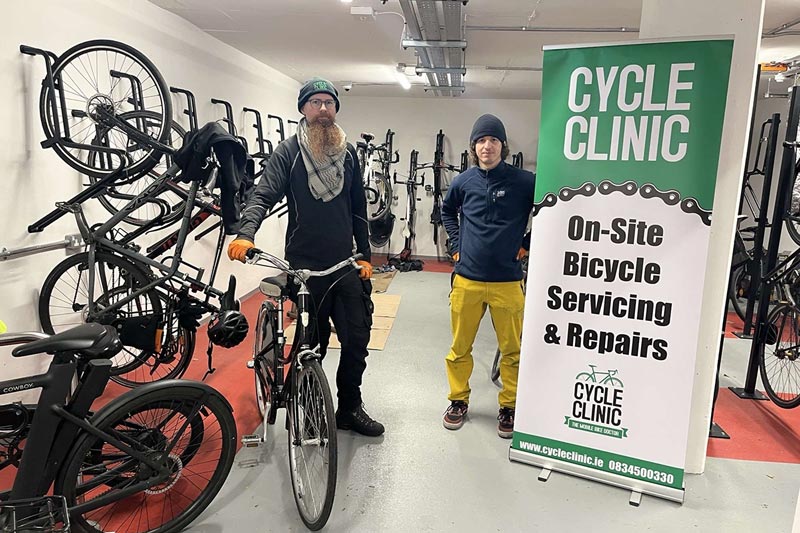
Understanding how we travel
Our commute survey achieved a 50% response rate, providing valuable emissions data and informing practical measures such as free bike clinics.
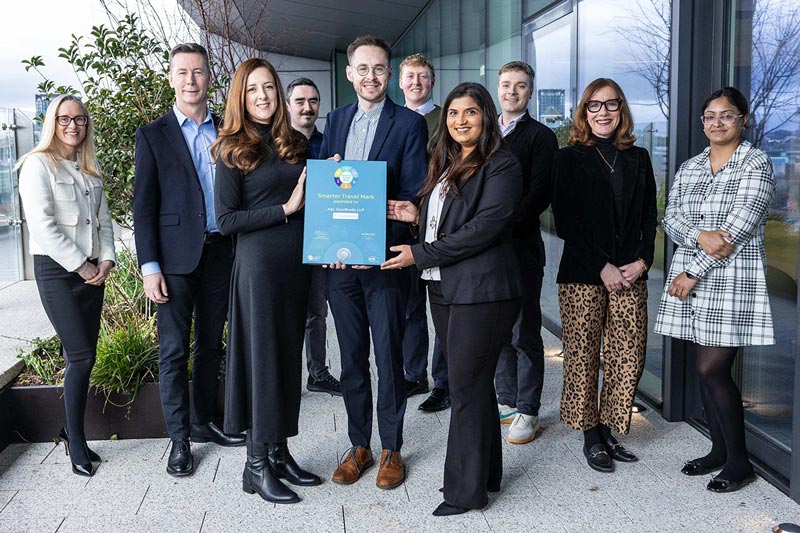
Supporting smarter travel
Our Sustainable Travel Hub, communications campaigns and employee engagement initiatives contributed to ALG achieving the Silver Smarter Travel Mark.
It was fantastic to see such strong engagement with our commute survey and the many constructive suggestions shared by colleagues. The insights gathered played an important role in our successful application for the Smarter Travel Mark, helping us achieve Silver accreditation."

Saumya Sadanad
Tax Advisor and Sustainable Travel Subcommittee lead
Circular economy
Our Circular Economy subcommittee supports initiatives that encourage responsible resource use and reduce waste.
Throughout the year, it championed practical initiatives that encouraged reuse, reduced waste and supported more circular ways of working.
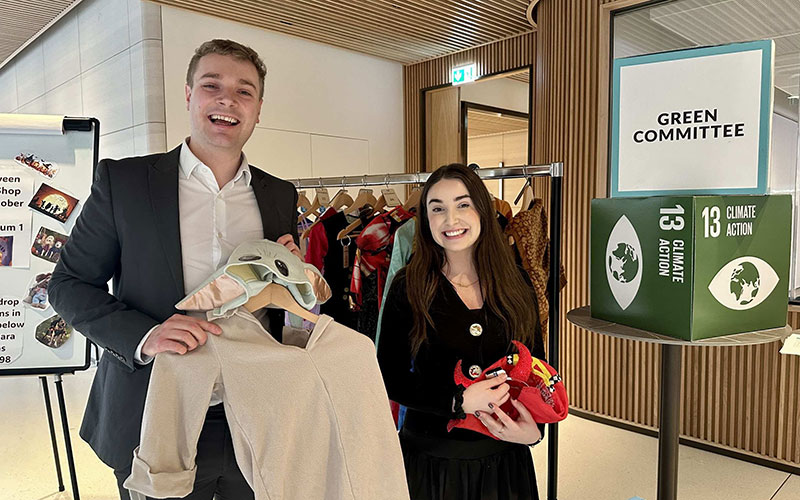
Promoting a culture of reuse
Swap shops and a charity Sip & Shop event through NI Hospice encouraged sustainable consumption and helped extend the life of clothing and other items.

Recycling with purpose
Our Re-turn collections are helping sixth-class students at St Laurence O'Toole's National School purchase their school hoodies.
Biodiversity
The Biodiversity subcommittee helps shape our approach to nature and biodiversity while encouraging our people to take practical actions to support nature in their gardens and communities.
All Ireland Pollinator Plan
In 2025 ALG became a Business Supporter of the All-Ireland Pollinator Plan.
Small actions, positive impact
Our Belfast Green Committee encouraged action for nature by distributing spring-flowering bulbs that provide an important early food source for pollinators.
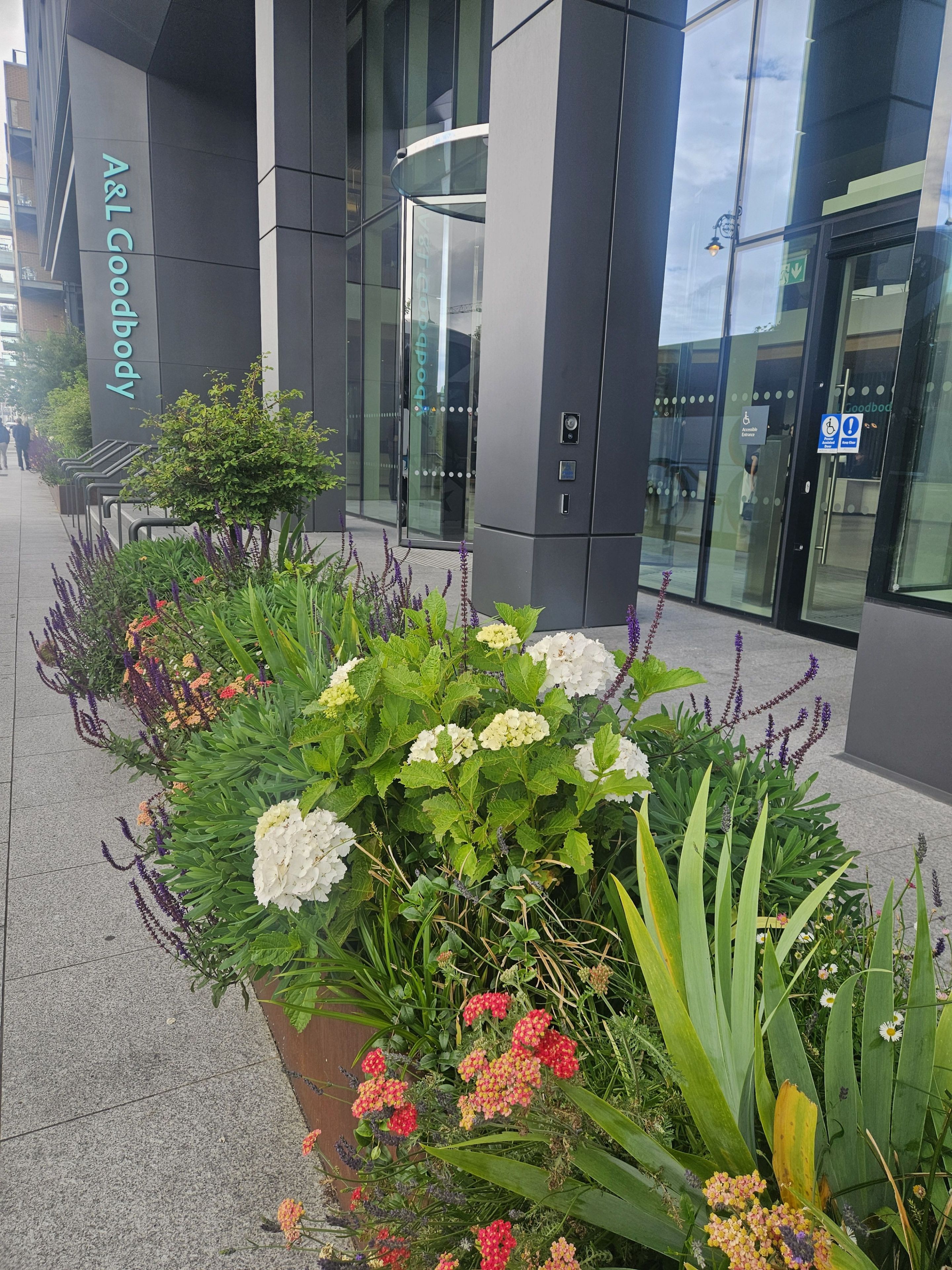
Supporting urban biodiversity at 25 North Wall Quay
The terraces at 25 North Wall Quay respond to the site’s riverside setting while also supporting urban biodiversity and enhancing the experience for building users.
From sunny, south-facing areas to more shaded northern spaces, the site’s planting strategy creates a diverse and resilient landscape across visually distinct but interconnected garden areas. Layered planting, combining flowering perennials with evergreen structure, ensures year-round interest and consistent habitat value.
A carefully selected mix of pollinator-friendly species has been introduced, supporting our commitments under the All-Ireland Pollinator Plan. Planting provides a continuous source of nectar and pollen from early spring through to late autumn.
Overall, the approach reflects a considered balance between amenity and ecology, showing how well-designed urban landscapes can contribute to biodiversity.
Learning and collaboration
Sector-wide impact
In 2025 we became members of the Legal Sustainability Alliance (LSA), a not-for-profit sustainability network run by law firms for law firms.
Through our involvement in its Sustainable Procurement and Biodiversity working groups, we share learning, contribute to the development of practical tools and guidance, and support more sustainable procurement practices and nature-positive action across the legal sector.
Hear more in this short video from Lorraine Fahy, our Senior Responsible Business Executive, on why we joined the Alliance and how collaboration with peer firms is helping to inform our approach to environmental sustainability.
Collaborating with Trinity Business School
As part of our commitment to nature-positive business, we volunteered with students from Trinity Business School's Business of Nature Positive module, under the guidance of Dr Catherine Farrell.
The students assessed ALG's readiness for biodiversity and ecosystem reporting under CSRD and ESRS E4. Their findings provided valuable insights into our strengths and areas for further development, helping to inform our approach to biodiversity reporting and responsible business.
Our environment partners and networks
©2026 A&L Goodbody LLP
All rights reserved