












Page Contents
Key Contacts
Related Services
Ireland’s FDI screening authority, the Minister for Enterprise, Tourism, and Employment (Minister) has now published the first annual report (the Report) on the screening of FDI under the Screening of Third Country Transactions Act 2023 (the Act) covering transactions notified in 2025. In parallel, the Department Enterprise, Tourism, and Employment (the Department) has published an updated version of the Inward Investment Screening Guidance for Stakeholders and Investors.
Key takeaways from the Report
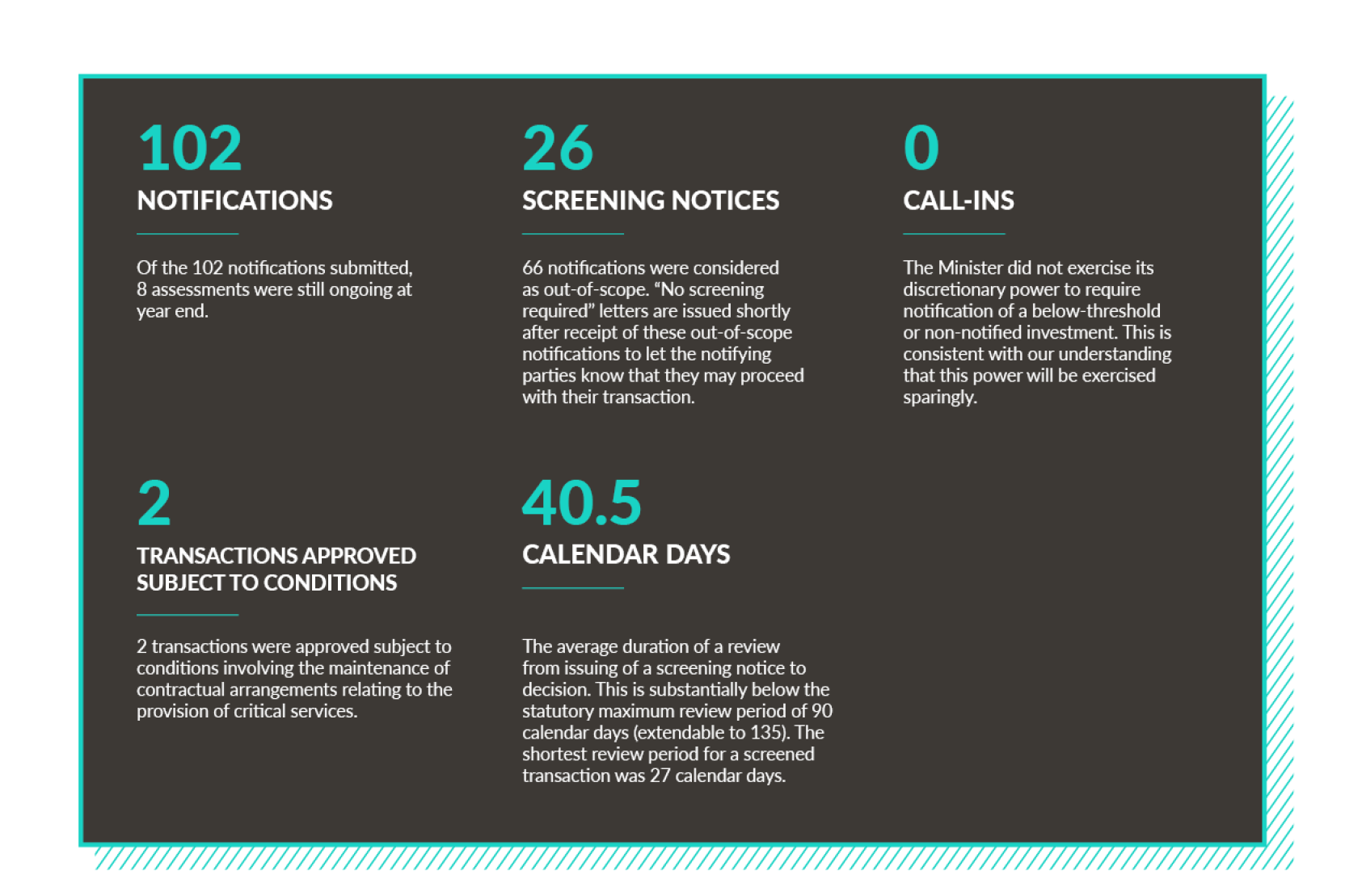
The Department, through its dedicated section, the Investment Screening Unit, received 102 notifications in 2025. Of these, 26 notifications (c.25%) were screened by the Minister to determine if they would affect or would be likely to affect security or public order in Ireland. 66 notifications were not screened by the Minister because they did not meet the notification criteria under the Act (in effect, no jurisdiction). Two transactions were cleared subject to conditions, and no deals were blocked in 2025. One notification was withdrawn by the transaction parties, one notification was rejected as incomplete and there were no called-in transactions. Eight notifications were subject to ongoing assessment as at 31 December 2025.
The average duration of a screening review was 40 calendar days from the issuing of a screening notice to decision. In the majority of cases, the Department completed its initial assessment of the notification within 10 calendar days.
Background to the Report
Ireland’s FDI screening regime commenced on 6 January 2025. The regime requires notification of certain investments by third country (i.e. non-EU/EEA/Swiss) entities in undertakings or assets in Ireland which are active in specified sensitive sectors (i.e. critical infrastructure, critical technologies/dual-use items, supply of critical inputs, access to sensitive information and media plurality). The Report covers the period from commencement to 31 December 2025 and provides the first comprehensive data on how the Minister has exercised the screening powers under the Act.
Review timelines
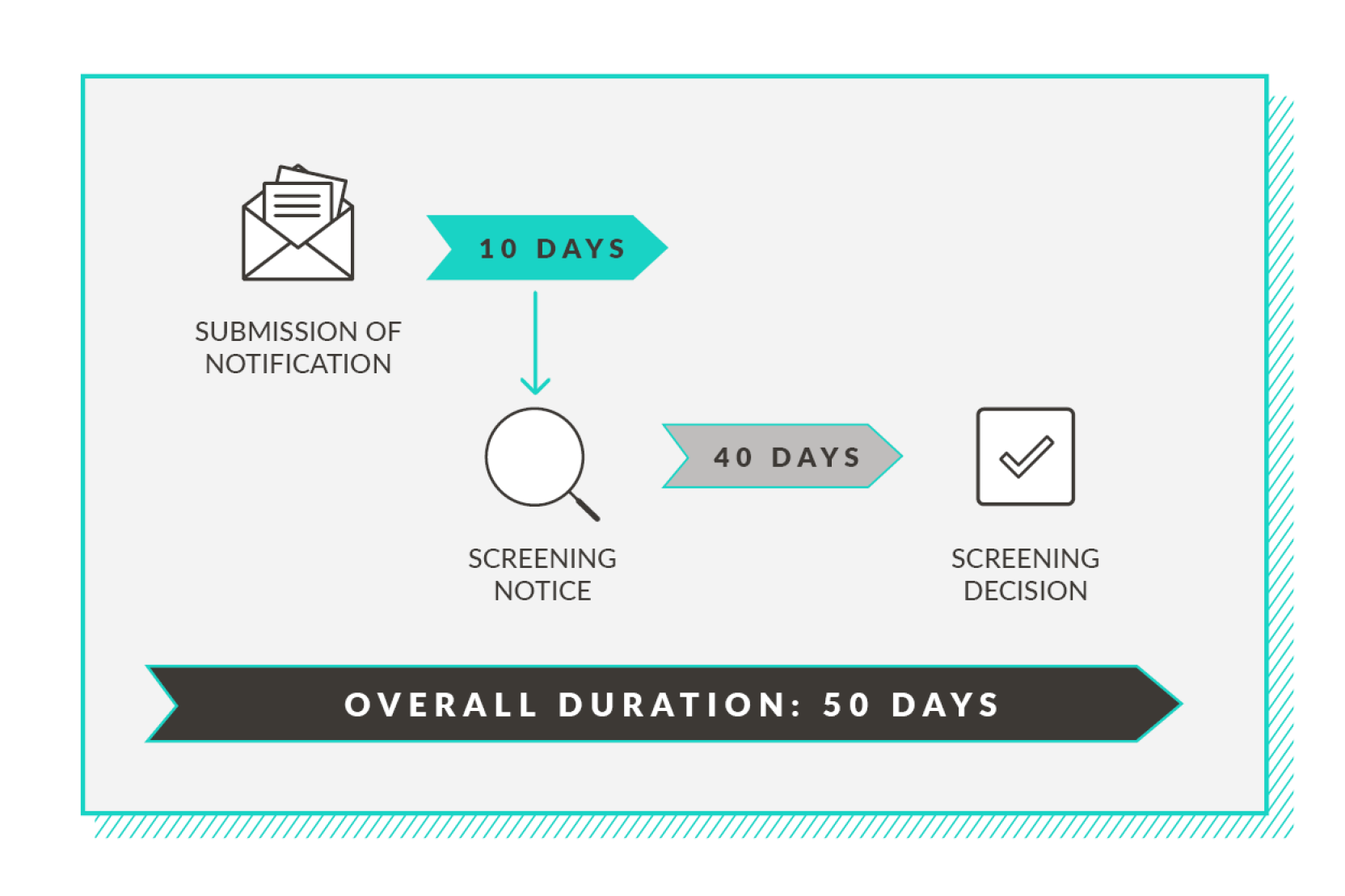
The Report provides useful information on the duration of reviews, an important consideration for transaction planning. Consistent with our experience, the average total review period (including initial assessment) is between 40 to 50 calendar days (but can be shorter).
The Department targets completion of its initial assessment within 10 calendar days. The average time taken in 2025 was 9.76 days, with a range of 0 to 47 days. Approximately two thirds of initial assessments were concluded within the 10-day target.
Of the 26 transactions that underwent full screening, the average review period was 40.5 calendar days (range: 27 to 85 days). Approximately two thirds of screening decisions were issued in fewer than 40 calendar days, which compares favourably with the statutory timeframe of 90 calendar days (extendable to 135 calendar days) provided under the Act. A request for information by the Department under the Act also stops the clock.
Emerging trends and areas of focus
The Report highlights several emerging patterns in the Department’s approach to FDI screening:
Geographic focus
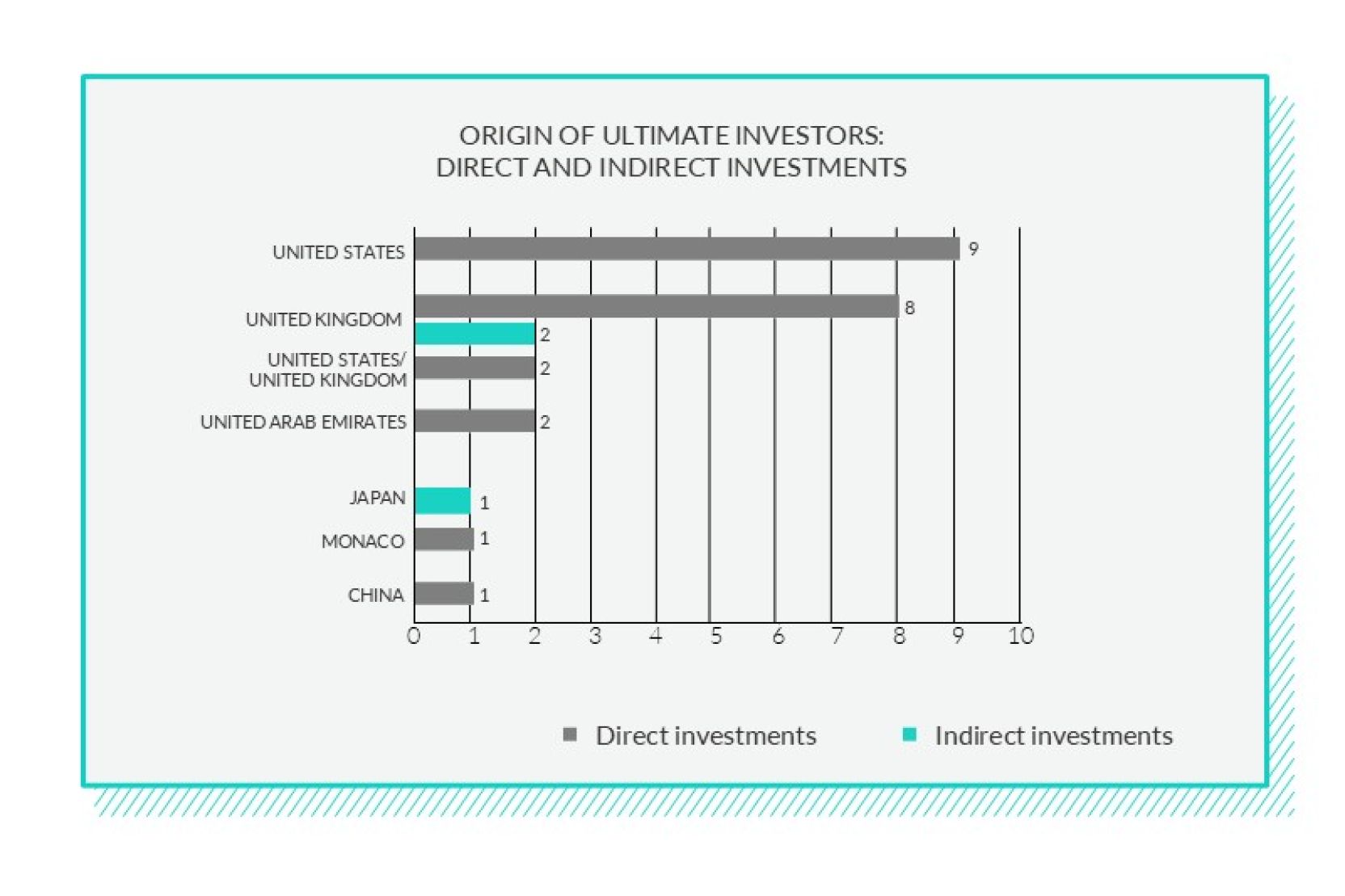
The Act does not target any specific third country. Notification is required once the thresholds under Section 9 of the Act are satisfied, regardless of which third country (i.e. non-EU/EEA/Swiss) entity is involved in the transaction. Both direct and indirect investments fall within the scope of the Act. Of the 26 transactions that were screened, 23 involved direct investments by third-country investors and three involved indirect investments. Of the three indirect investments, the countries of the ultimate investors were the UK (two) and Japan (one).
Sensitive sectors
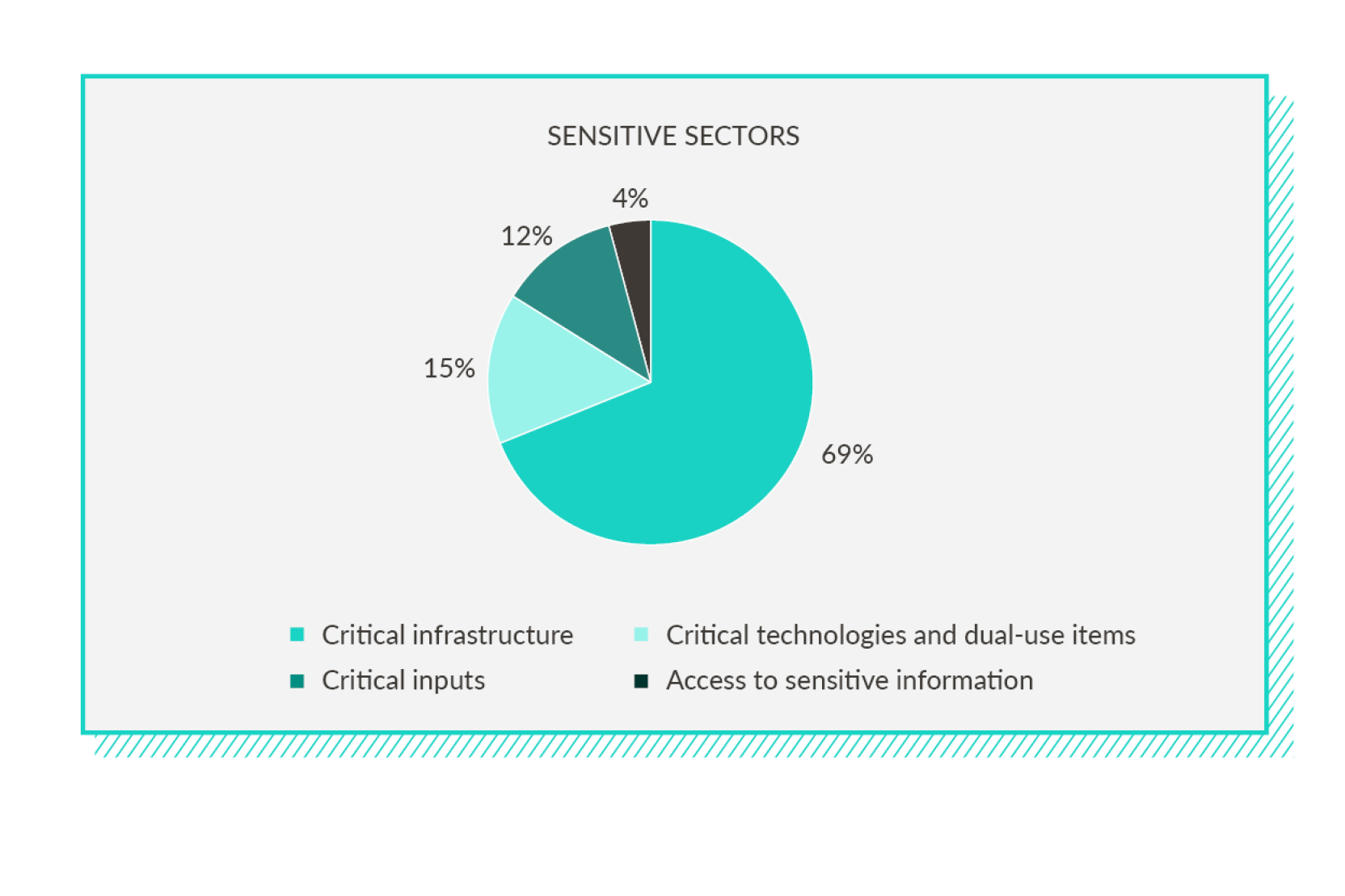
The Report includes a breakdown of screened notifications as they relate to each sensitive sector. The most common ground by far was critical infrastructure, which accounted for 69% of total notifications. Among the remaining notifications, critical technologies and dual-use items accounted for 15%, supply of critical inputs for 12%, and access to sensitive data another 4%. Freedom and pluralism of the media did not feature.
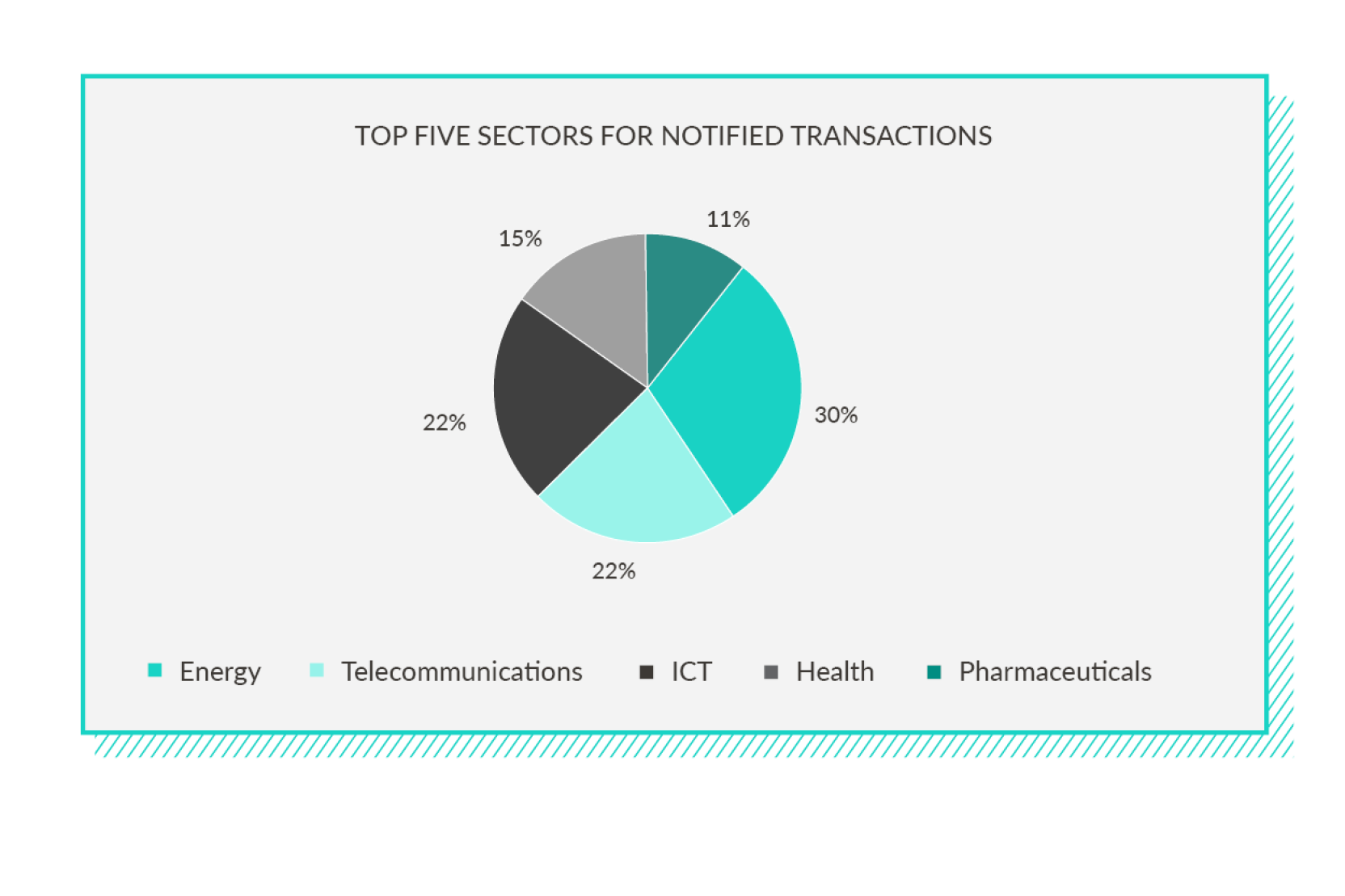
The most common categories of investments subject to FDI screening were in the energy, ICT, and life sciences sectors.
Outlook and upcoming developments
While the Report did not signal any impending revisions to the Act, several developments may affect the Irish FDI screening landscape:
Practical implications for investors
Based on the Report, investors planning transactions involving Irish targets should consider the following:
For more information on Ireland’s FDI screening regime or assistance with FDI notifications, please contact Dervla Broderick, Alan McCarthy, Anna-Marie Curran, Vincent Power or any member of A&L Goodbody’s EU, Competition & Procurement team.
Date published: 28 May 2026